
Hello, my solstice brethren.
Hoping that by the time you read this, everything has been cleaned and scrubbed and put away. And each of you is already dreaming about Tupperware and all those fabulous leftovers.
In the meantime, let’s take a quick look at the 24th U.S. State. Yes, let’s look at twenty-four twenty-fours for the Show-Me State, the core of America’s Heartland .
- Admission date: Missouri became the 24th state on August 10, 1821, as part of the Missouri Compromise.
- The “Show-Me State”: This is its official nickname (though considered unofficial by the “Show-Me State,” and is often attributed to a Congressman who claimed Missourians only believe in facts, not “frothy eloquence.”
- State flag: The flag features 24 stars surrounding the state’s coat of arms, representing its order of entry into the Union.
- Grizzly bear odditiy: Although two grizzly bears are on the state flag, the species has never lived in the state.
- Legal-minded state motto: The state motto, “Salus populi suprema lex esto,” is Latin for “The welfare of the people shall be the supreme law.”
- Major rivers: It is bordered by the Mississippi River on the east and the Missouri River on the west and north.
- Geographic center: For many years, the center of the national population was located in Hartville, Missouri, about 200 miles southeast of Kansas City.
- The Ozarks: The state is home to the Ozark Plateau.
- The “Cave State”: Missouri is sometimes nicknamed the “Cave State” due to its over 6,000 caves.
- Extreme weather: Located in what’s called “Tornado Alley,” Missouri is highly susceptible to severe thunderstorms and tornadoes.
-
Louisiana Purchase: The territory was acquired by the U.S. as part of the 1803 Louisiana Purchase.
-
Civil War division: During the Civil War, Missourians were sharply divided, supplying troops to both the Union and Confederate forces.
-
Birthplace of music: It is the birthplace of several distinct musical genres, including ragtime, Kansas City jazz and the St. Louis blues.
-
Lewis and Clark: The Lewis and Clark Expedition started near St. Louis as they ventured westward.
-
Pony Express and Jesse James: The Pony Express had a starting point in St. Joseph, which is also home to a museum dedicated to
infamous outlaw. -
The New Madrid, MO earthquakes of 1811 and 1812: The most intense earthquake ever recorded in the contiguous U.S. occurred in New Madrid, Missouri and was reportedly felt over 1,000 miles away. The following year, a less-severe one hit the same area.
-
Admission date: Missouri became the 24th state on August 10, 1821, as part of the Missouri Compromise.
-
Hannibal, Missouri is the hometown of author Mark Twain and serves as the inspiration for the fictional town of St. Petersburg in both “The Adventures of Tom Sawyer” and “The Adventures of Huckleberry Finn.”
-
State-wide epidemic – In 1849, a cholera epidemic struck St. Louis, killing over 4,000 people.
- Education excellence – The University of Missouri is the first college in the world to grant a journalism degree. It opened on September 14, 1908.
- Airborne firsts – The first parachute jump from a plane was also made at Jefferson Barracks, St. Louis on March 1, 1912.
- P.O.T.U.S. fact: Harry S. Truman, the U.S.’s 33rd President was the only president of the United States born in Missouri. Additionally, Truman spent his childhood in Independence, MO, somehat emblematic of his fiercely indpendent nature.
- Fountain Land: Kansas City, Missouri, is home to more than 200 fountains. If fact, K.C. trails only Rome, Italy as the city with the most fountains worldwide.
- Homage to World War II: Missouri is home to the National Churchill Museum, commemorating Winston Churchill’s famous “Iron Curtain” speech.
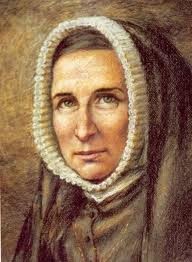
Finally, meet Rose Philippine Duchesne, French missionary (1769 – 1852). She spent her later years in St. Charles, Missouri just northwest of St. Louis.
Have a great night, all.
See you tomorrow for Day 23.
JFish
@Copyright 2025 by John L. Fischer